Artikel: Beach vs Church vs Garden Wedding: Which Dress Fits Each Venue?
Beach vs Church vs Garden Wedding: Which Dress Fits Each Venue?
The venue for your wedding affects more than the setting in your photos. Fabric weight, train length, and overall structure all need to hold up to the specific conditions of where you are getting married. This guide compares three common venue types and what to consider for each before choosing your wedding dress.
Beach Weddings: Fabric Weight and Movement Matter Most
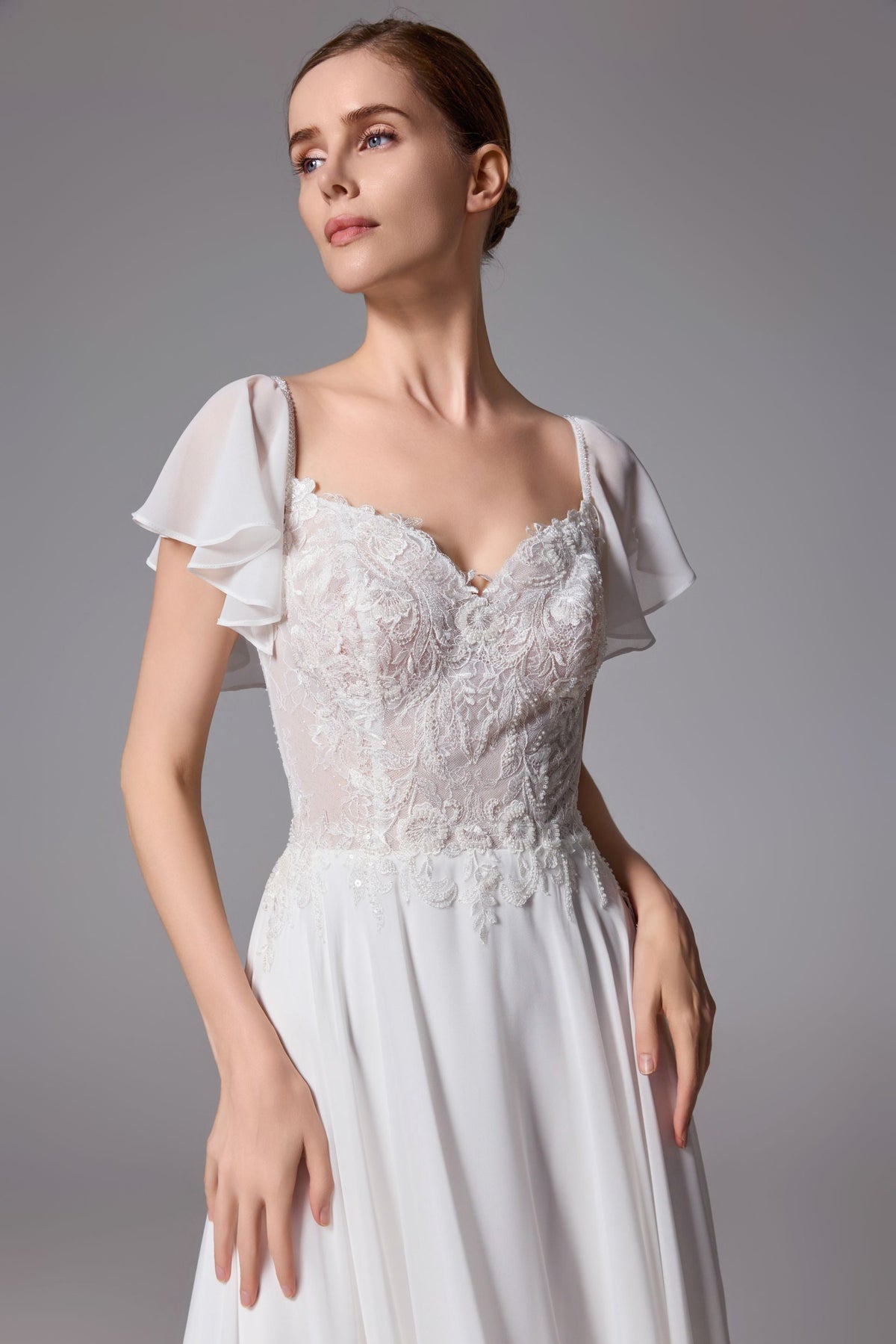
Sand, wind, and heat are the main factors to plan around for a beach wedding. Heavier fabrics can feel uncomfortable in direct sun and are harder to manage if the dress drags across sand. Lighter, more breathable fabrics that move easily in wind tend to work better, and a shorter or higher-slit design can help avoid the hem dragging or collecting sand throughout the day. A long, dramatic train is one of the least practical choices for a beach ceremony, since sand and water can damage delicate fabric quickly. See our beach wedding dresses for styles built with this in mind.
Church Weddings: Coverage and Formality Expectations
Many churches have specific dress code expectations, particularly around shoulder and back coverage, so it is worth checking with the venue before finalizing a dress choice. Church settings also tend to suit more structured, formal silhouettes, since the architecture and ceremony format typically call for a more traditional presentation than a casual outdoor setting would.
Garden Weddings: A Middle Ground Between Formal and Relaxed
Garden venues sit between the formality of a church and the practicality demands of a beach. Grass and uneven ground can be a factor for very long trains, similar to beach settings, but there is generally more flexibility for structured silhouettes than a beach wedding allows. Lighter fabrics that do not wrinkle heavily tend to hold up well outdoors, particularly for daytime garden ceremonies with direct sun exposure for part of the day.
Weather Considerations Across All Outdoor Venues
Both beach and garden weddings share one planning factor that church weddings generally do not: exposure to weather on the day itself. Checking expected temperature and humidity for your date and location can help decide between a heavier fabric with more structure and a lighter fabric that prioritizes comfort in heat.
Train Length: When It Works and When It Gets in the Way
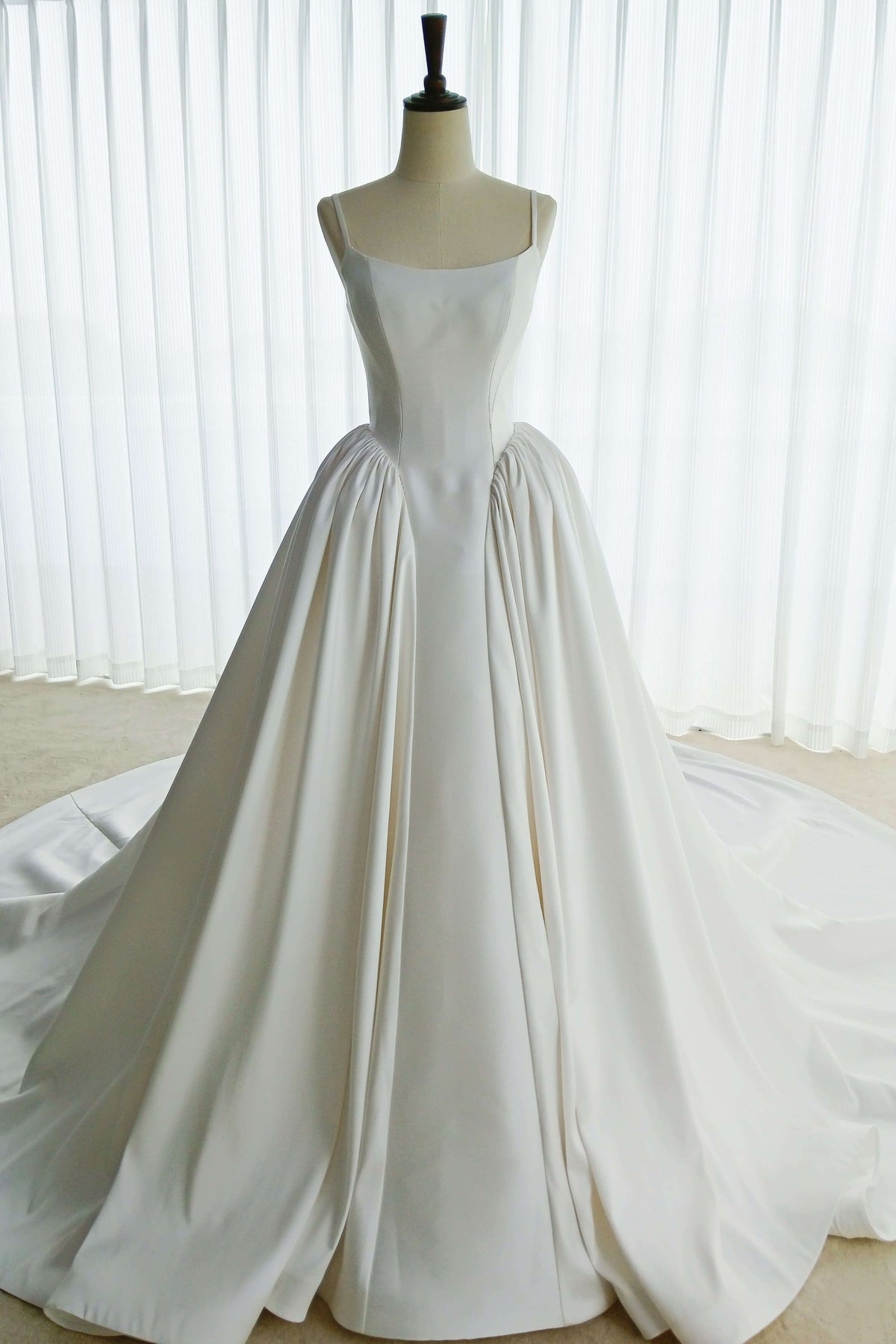
A long train photographs well in a controlled indoor setting like a church, where the floor is flat and predictable. Outdoor settings with sand, grass, or uneven pathways make longer trains harder to manage, both for movement and for keeping the fabric clean. If you want a train for an outdoor wedding, a shorter or detachable option is generally more practical than a full-length train. For church settings where a longer train works well, our cathedral train ball gowns are designed for exactly this.
Whatever venue you choose, Andbride includes free custom sizing on every order, so fit and proportion can be adjusted to your specific dress and body rather than relying on a standard size across different silhouettes.
Frequently Asked Questions
What fabric is best for a beach wedding dress?
Lighter, more breathable fabrics that move easily in wind and heat tend to work better for beach weddings than heavier, structured fabrics, which can feel uncomfortable in direct sun.
Do churches have dress requirements for wedding dresses?
Many churches have expectations around shoulder and back coverage. It is worth confirming with the specific venue before finalizing a dress choice.
Is a long train practical for an outdoor wedding?
Long trains are harder to manage on sand, grass, or uneven ground. A shorter or detachable train is generally more practical for outdoor venues than a full-length train.