Artikel: How to Choose a Wedding Dress Silhouette for Your Body Shape
How to Choose a Wedding Dress Silhouette for Your Body Shape
Choosing a wedding dress silhouette is often based on what looks good in photos rather than what actually suits your own proportions. A silhouette that flatters one body shape can work against another, even in the same fabric or price range. This guide breaks down what each silhouette does structurally, so you can choose based on fit rather than trend.
Why Silhouette Matters More Than Style Trends
A silhouette is the overall shape a dress creates on the body, determined by where it is fitted, where it flares, and how much structure it has at the waist and hips. Two dresses can share the same neckline or fabric and still look completely different depending on silhouette. Understanding this distinction matters more than choosing a currently popular style, since a well-matched silhouette will photograph and feel comfortable regardless of trend.
Fitted Silhouettes That Follow the Body's Natural Line
Silhouettes that stay close to the body through the waist and hips, flaring only near the knee or below, tend to elongate the frame and emphasize natural curves. These work well for people who want to highlight their waist-to-hip proportion, but they also require more precise fit through the midsection, since there is less fabric to hide a size discrepancy. Browse our mermaid wedding dresses to see this silhouette in practice.
Structured Silhouettes With Volume at the Skirt
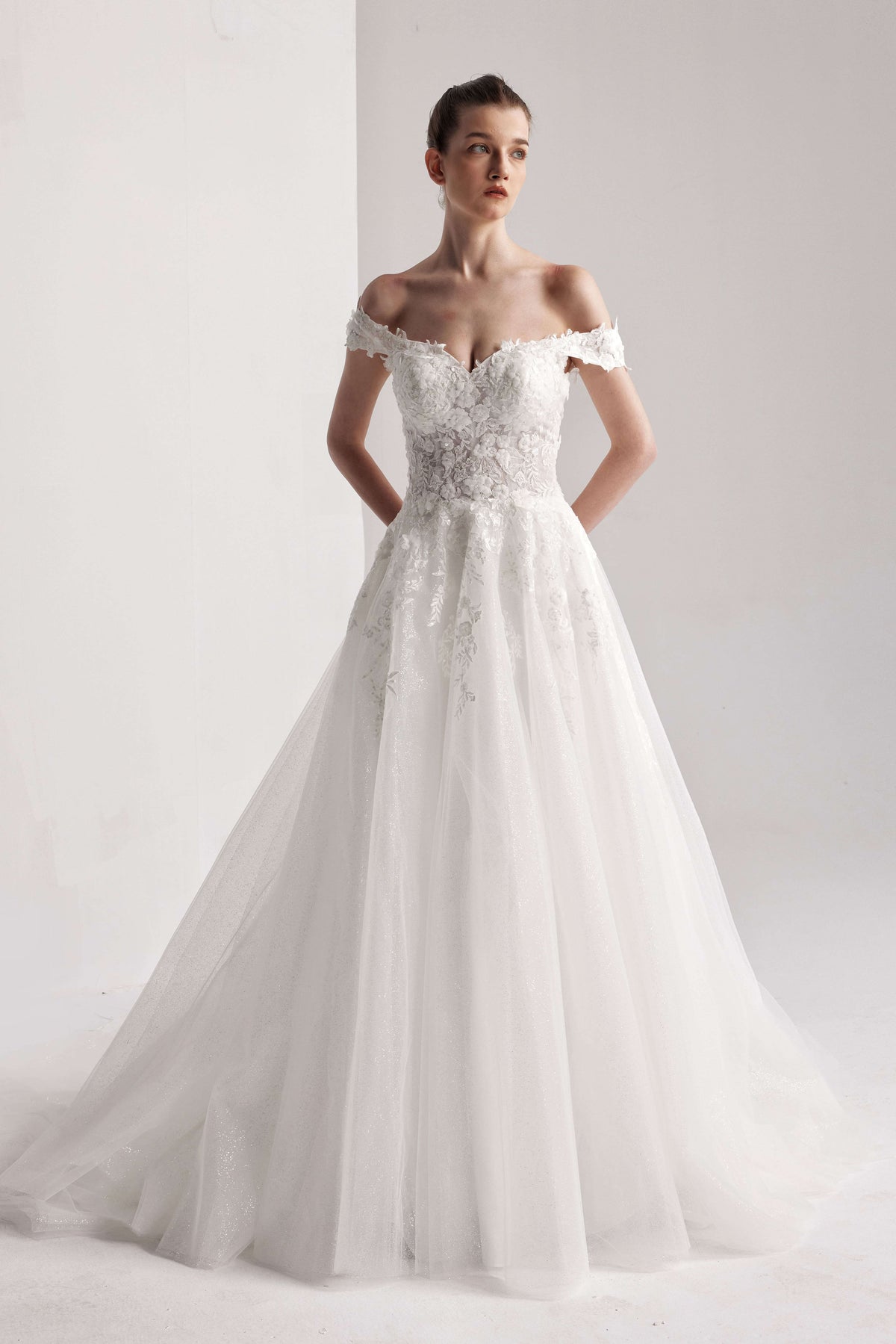
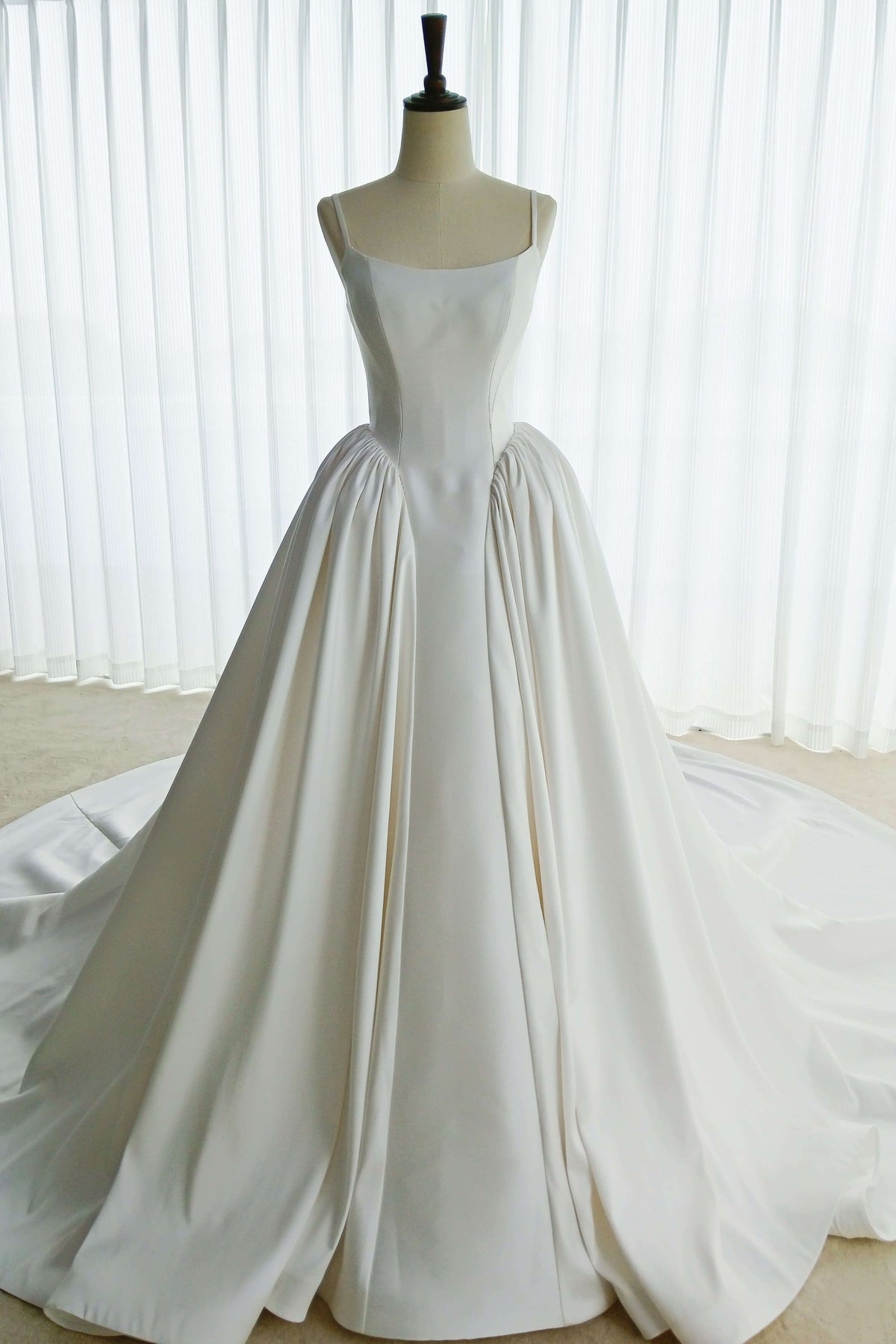
Silhouettes with a fitted bodice and a fuller skirt starting at the waist create a defined waistline while adding volume below it. This shape tends to balance proportions for those who want to minimize emphasis on the hip area, and the structured bodice generally provides more built-in support, which can matter for larger bust sizes. Our ball gown wedding dresses are a good example of this structured shape.
Relaxed Silhouettes With Minimal Structure
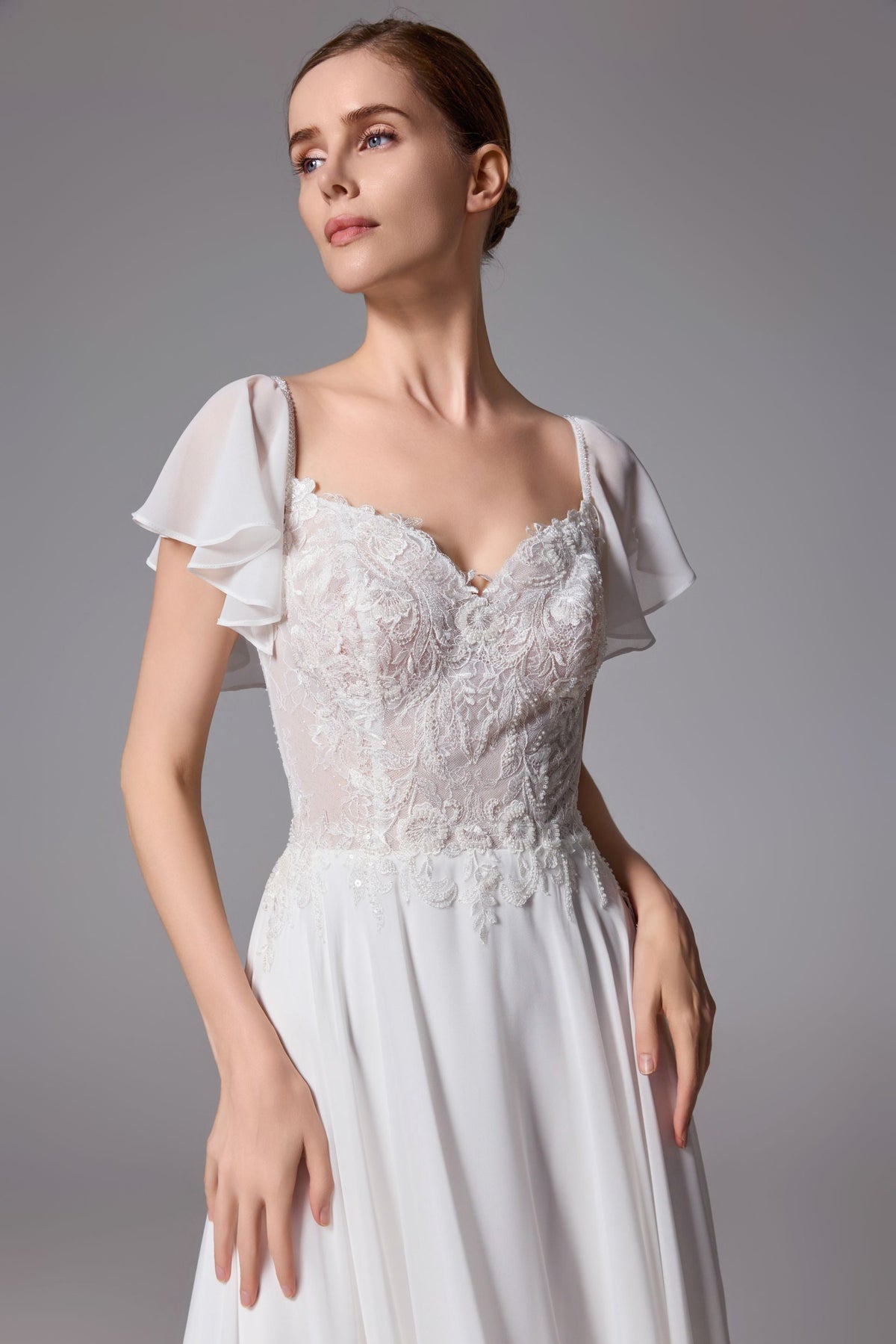
Some silhouettes are cut with minimal shaping at the waist, allowing the fabric to fall more loosely from the shoulders or bust. These tend to suit those who prefer comfort and movement over a fitted structure, and they are often more forgiving of measurement changes between ordering and the wedding date, since there is more ease built into the cut. This is the approach behind our simple wedding dresses collection.
Matching Silhouette to Height and Proportion
Height and torso-to-leg ratio affect how a silhouette falls, independent of overall body size. A high-volume skirt can visually shorten a smaller frame, while a straight, fitted silhouette can elongate it. If you are unsure, trying to visualize where the fullest part of the skirt sits relative to your own proportions is more useful than choosing based on a model's proportions in a product photo.
When Custom Sizing Solves a Silhouette Problem
A silhouette you like in photos does not always translate directly to standard sizing, particularly if your measurements fall between standard size brackets. This is one of the more overlooked benefits of custom sizing, since it allows a silhouette to be built around your specific proportions rather than adjusted after the fact.
Every dress at Andbride includes free custom sizing, so the silhouette you choose can be fitted to your actual measurements rather than the closest standard size.
Frequently Asked Questions
How do I know which silhouette suits my body shape?
Consider your waist-to-hip proportion, torso-to-leg ratio, and how much structure you find comfortable. Fitted silhouettes emphasize curves, structured silhouettes balance proportions, and relaxed silhouettes prioritize comfort and movement.
Can custom sizing change how a silhouette fits?
Yes. Custom sizing builds the dress around your actual measurements rather than the closest standard size, which can meaningfully change how a silhouette sits on your body compared to an off-the-rack fit.
Does height affect which silhouette I should choose?
Yes. Height and torso-to-leg ratio affect how a silhouette falls independent of overall body size, so the same silhouette can look different on two people of different heights.